


When a home depends on a septic system, the drain field plays a big part in making sure everything works the way it should. This section of the system is where treated wastewater flows out and gets absorbed into the ground. If something goes wrong with it, everyday things like showers, dishwashing, and laundry can come to a messy standstill.
Drain fields do not usually fail all of a sudden. In most cases, they send up quiet warning signs long before anything backs up into the house. Being aware of those early clues can make the difference between a quick fix and a full-blown repair. This is especially true during Oklahoma’s wet and chilly winter months, when cold ground and groundwater can make conditions tougher. For homeowners who rely on onsite systems, catching these signs early can help prevent the need for major drain field repair in Oklahoma later. Our technicians service residential and commercial systems across counties like Cleveland, Grady, McClain, Noble, and Comanche, and we see firsthand how quickly winter conditions can turn small drain field issues into bigger problems.
What a Drain Field Does and Why It Can Fail
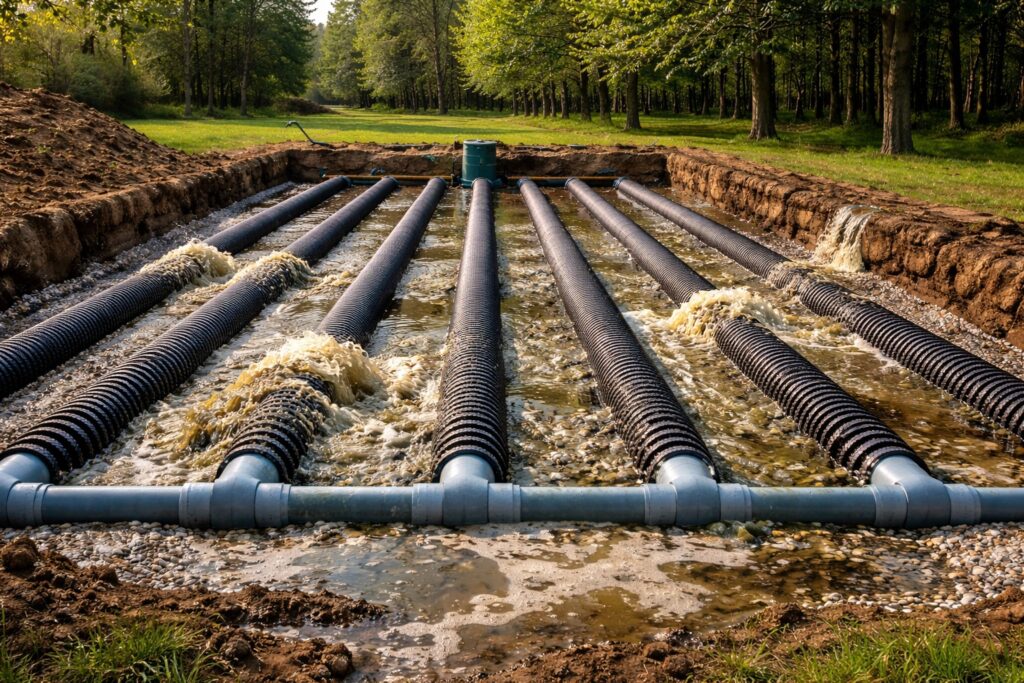
After wastewater flows through the septic tank, it heads to the drain field. This area includes a series of perforated pipes laid out across a patch of soil. The pipes help spread the water out so the surrounding soil can absorb it. The soil acts as a natural filter, allowing the treated water to safely absorb back into the ground. Whether a property uses a conventional, aerobic, or ETA system, a healthy drain field is what allows that final treatment step to happen.
Problems pop up when something blocks or overwhelms that natural process. Here in Oklahoma, the ground can shift with changing temps and moisture levels. Clay-heavy soil can become compacted and slow down the absorption rate.Add in freezing temperatures, and the absorption process can slow down even more. In some cases, freezing can cause water to pool or back up before it has a chance to soak into the ground.
The winter season adds extra pressure, especially in rural areas that see heavy holiday use or more indoor activity because of cold weather. Shorter days and wet conditions can limit access for repairs, so spotting trouble early in these months matters more than ever.

Early Warning Signs of Trouble in the Drain Field
Some problems make a big entrance, but most issues with the drain field begin quietly. The signs might not seem like much at first, but over time, they add up. Keep an eye out for surface-level changes near the drain field area.
Look for these early red flags:
• Drains in the home start running slower than usual
• Muddy or soft spots appear in the lawn even when it has not rained
• A strong, unpleasant smell starts coming from the yard
Another sign is unusually bright green patches in certain parts of the yard. In colder weather, grass should not be thriving, so patchy growth can mean too much water or waste is collected below. It often starts with just one of these signs, but more will follow if the issue is not addressed.
Hidden Signs That Point to Bigger Drain Field Problems
Not all drain field issues show up on the surface. Some start inside the house and can be easy to overlook. These signs may be harder to connect to your septic system, but they are just as important to take seriously.
Telltale clues might include:
• Gurgling sounds coming from sinks or toilets
• Sewage odors inside the house
• Random backups that clear up but return later
All of these signs could mean the system is not allowing wastewater to flow out into the soil properly. Instead of moving through the drain field like it should, the water can start pushing backward. That affects everyday home use and raises the risk of damaging the system. Getting ahead of these issues makes a difference, especially if the weather turns harsh.
Why Timing Matters for Drain Field Repairs in Oklahoma
In counties like Cleveland, McClain, and Comanche, winter often comes with freezing temperatures and bursts of rainfall. When the ground gets saturated or frozen, working on a drain field becomes harder. Equipment may not reach the site easily, and full repairs can take longer to schedule or carry out. Conditions like these make quick fixes less likely.
Waiting too long can lead to more than inconvenience. Continued overflow might damage the soil structure or cause waste to spill out, potentially harming nearby areas. Yard damage is also common when a repair has to happen in poor conditions. Even everyday use of sinks or washing machines could make things worse if the system is already stressed and the ground is not ready to absorb more water.
Planning ahead by spotting early problems helps prevent rushed work or seasonal delays. It gives homeowners a better chance at choosing when to fix something instead of being forced into emergency action.
Peace of Mind Starts with Noticing the Small Stuff
Watching for early signs of a drain field issue can make the difference between a routine repair and a major disruption. When problems start in the winter, timing is especially important. Rain, cold, and frozen ground across Oklahoma all work against septic systems and do not give much slack to an already strained drain field.
By staying alert to changes like slow drains, backyard puddles, or odd smells in the house, homeowners put themselves in a better position to act quickly. A well-functioning drain field plays a quiet but important role in daily routines. Paying attention now could help prevent bigger issues down the road, and keep things running smoothly when it matters most.
If something feels off with your septic system and you’re noticing slow drains or soggy spots in the yard, it may be time to take a closer look. Winter weather in Oklahoma can quickly turn minor issues into bigger ones, especially when the ground freezes or gets oversaturated. We’re here to help homeowners spot the early signs so they can avoid long-term damage and disruption. To learn more about how we handle drain field repair in Oklahoma, contact Septic Near Me OK today.

